
















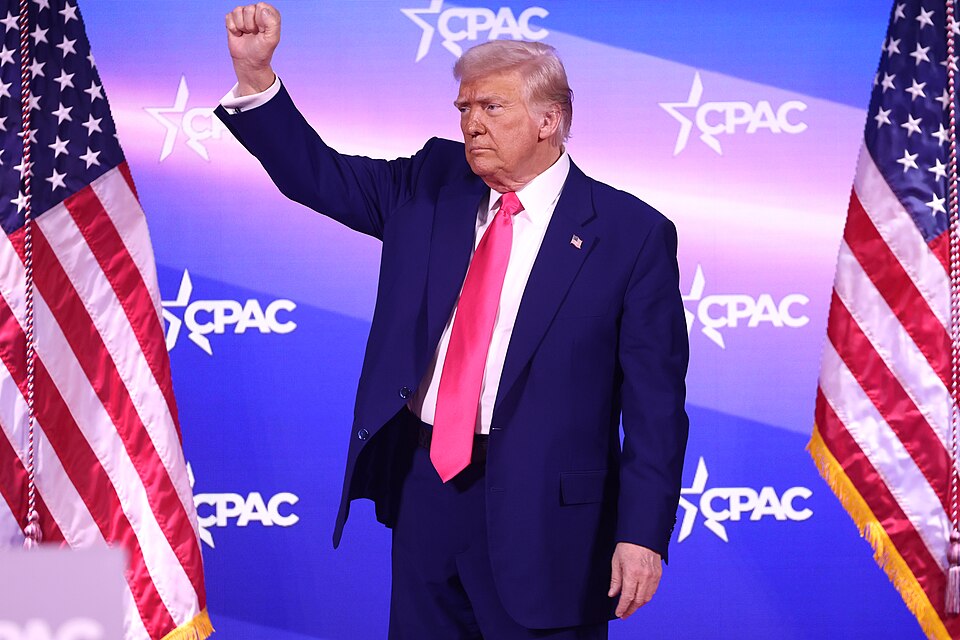












On January 21, 2026, President Donald Trump made the world aware of his want to acquire the Danish territory Greenland, Trump already expressed his interest in acquiring Greenland years before, in August of 2019. What was initially viewed as an unserious offhanded remark has evolved into an international debate about the nation’s sovereignty, geographical placement, and possible strategic usage for the United States as a buffer zone.(Reuters.com)
President Trump wishes to obtain Greenland for a multitude of reasons though he openly denies wanting greenland for material resources like rare earth metals and fuel reserves. Trump also framed Greenland as in need of U.S. protection, stating that the island is constantly surrounded by Russian and Chinese ships. Additionally, Trump also includes that the acquisition of Greenland is necessary for economic security, which leads many to assume his goals are more resource focused than he initially disclosed. Public reaction to this within the United States sparked a division between the American people, with one side believing this to be a bold way to expand American interests into the arctic, though critics call it a lofty goal that overlooks Greenland’s national sovereignty.(Ohchr.org)
Trump’s interest in Greenland also caused political tensions between the northern European nations and the U.S. With Greenlandic leaders stating that Greenland belongs to its people and is not for sale, and the Danish Prime Minister calling President Trump’s goal unrealistic, which led to Trump cancelling a planned state meeting in Copenhagen, Denmark. This decision sparked even more media coverage and tension within Denmark, with many Danish citizens speaking out at protests across the country, calling the President’s behavior childish, and noting that Trump’s goal to acquire Greenland for a military buffer zone is unfounded based on the fact that the United States military already occupies Greenland in several areas.
Ultimately, Trump’s Reignited goal to acquire Greenland sparked many debates about national sovereignty, arctic security, oil and mineral disputes, climate problems, geopolitical issues, and demonstrates how America’s foreign policy and international goals can affect the rest of NATO and other world powers. As well as how the goals of world superpowers can heavily influence the state of large international organizations, and how the nations with that level of influence should responsibly act with that influence.